
How to Monitor Brand Mentions: A Practical Guide
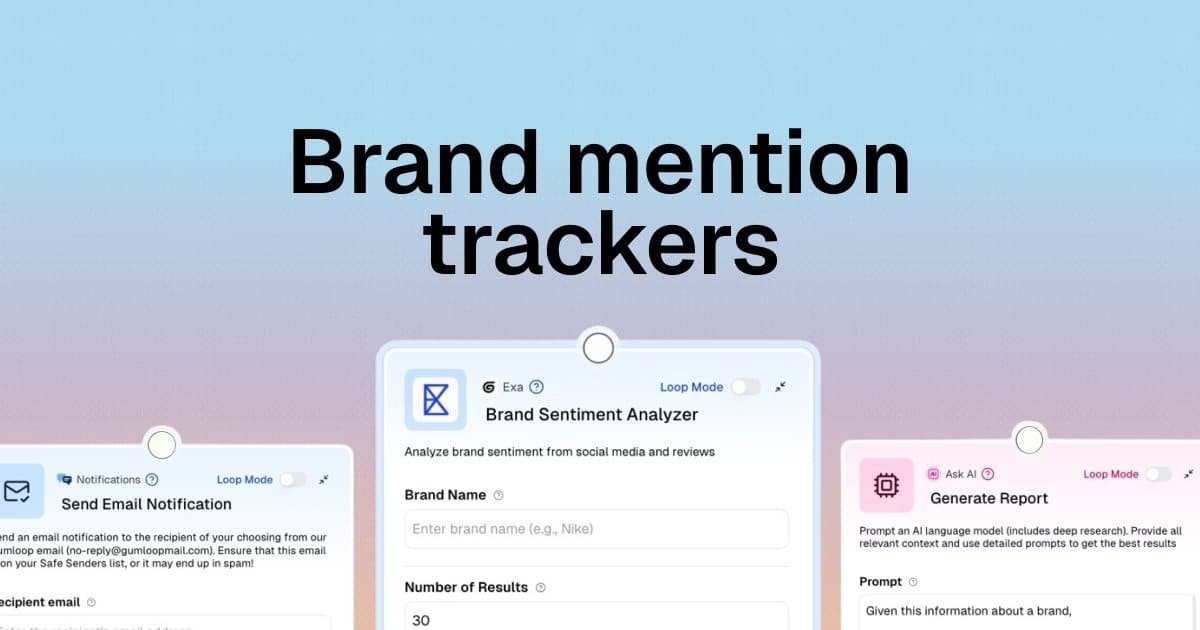
Brand monitoring is the ongoing process of finding, assessing, and responding to public conversations about your business across social media, review sites, news, forums, blogs, search results, and AI-generated answers. Done well, it helps you spot customer problems early, protect trust, learn what buyers care about, and turn relevant mentions into relationships, product improvements, and qualified leads. The goal is not to reply to every post; it is to notice the conversations that matter and respond appropriately.
Online reputation can influence real buying decisions. BrightLocal’s 2026 Local Consumer Review Survey reports that 97% of consumers read reviews for local businesses, while 85% say positive reviews make them more likely to use a business and 77% say negative reviews make them less likely to choose one. These findings focus on local-business reviews, so they should not be treated as universal conversion rates—but they show why businesses need a consistent process for listening and responding.
1. Decide what you need to monitor
Start with a defined list of search terms instead of trying to track everything on the internet. Include variations that customers, journalists, partners, and competitors might use.
- Brand names: Your company name, spacing variations, common misspellings, abbreviations, and social handles.
- Products and services: Product names, branded features, campaign names, and distinctive terminology.
- People: Founders, spokespeople, executives, and public-facing experts when their names are relevant to the business.
- Competitors: A small set of direct competitors and phrases such as “alternative to [competitor]” or “switching from [competitor].”
- Customer-intent phrases: “Can anyone recommend…,” “looking for a…,” “problem with…,” and other language that signals a need your business may be able to solve.
- Campaign and reputation terms: Hashtags, product launches, support issues, and phrases associated with known risks.
Use exact-match phrases where possible, but test broader variants too. A query that is too narrow can miss relevant conversations; one that is too broad can flood your team with noise. Review search terms regularly and remove irrelevant matches.
2. Monitor more than tagged social posts
Not every mention tags your account or links to your website. People may talk about a company in a review, community thread, podcast, news story, video transcript, or AI-generated recommendation without notifying the brand directly. Build coverage around the channels where your audience actually researches and discusses products.
- Search and news: Set up Google Alerts for your brand, product names, and important executives. Treat alerts as a useful baseline, not a complete record of every mention.
- Social networks: Use each platform’s native search and notification features, plus a social-listening tool if you need centralised monitoring or team workflows.
- Review platforms: Check the review sites relevant to your category and location. Assign someone to acknowledge feedback and route product or service issues to the right team.
- News, blogs, and forums: Search for unlinked mentions and customer discussions in industry communities. Respect community rules; helpful participation is better than unsolicited promotion.
- Video and podcasts: Where your audience uses these formats, track transcripts, titles, descriptions, and creator mentions. Coverage will vary by tool and platform.
- AI answers: Periodically test customer questions in AI search and assistant products to see whether your brand is mentioned, what sources are cited, and which competitors appear.
Do not assume any one tool sees the entire web. Platform access, indexing delays, privacy settings, language, and search syntax all create blind spots. Use manual spot-checks to compare what your tools report with what you can find directly.
3. Choose tools based on the job
A small business may only need free alerts, saved searches, a shared inbox, and a simple tracking sheet. A larger team may need cross-platform listening, sentiment analysis, team assignment, reporting, and integrations with customer support or CRM software.
- Google Alerts: A simple, no-cost starting point for indexed web content and news.
- Native platform search: Useful for direct conversations on individual social networks and communities.
- Social listening and media monitoring: Consider a paid tool when you need broader coverage, historical analysis, configurable alerts, or team workflows. Compare the platforms and data sources it actually covers before committing.
- Review management: Useful if you have multiple locations or review profiles and need to assign responses, monitor ratings, and report trends.
- CRM or help-desk integration: Helpful when mentions need to become sales opportunities, support cases, or product feedback rather than staying in a marketing dashboard.
- AI visibility checks: Start with a repeatable set of prompts and record whether your brand appears, its position, and the sources cited. Specialist tools may automate this, but outputs can vary from one run to the next.
Before choosing a vendor, test its coverage against real mentions you already know about. Check alert speed, duplicate handling, language support, export options, retention, privacy terms, and the cost of adding more keywords or users. A long feature list is less useful than reliable coverage of the places your customers use.
4. Set up alerts and a response workflow
Alerts only help when someone owns the next step. Create separate alert levels for routine mentions, customer complaints, sudden volume spikes, press inquiries, and possible legal or safety issues.
- Collect: Capture the mention, source, date, author or account, link, and relevant context.
- Classify: Label the topic, likely sentiment, urgency, and whether the mention is a question, complaint, review, recommendation, or news story.
- Assign: Route support issues to customer service, product feedback to the product team, press inquiries to communications, and potential legal or security issues to the appropriate lead.
- Respond: Acknowledge the person, answer what you can, and explain the next step. Move private account details into a secure support channel.
- Close the loop: Record the outcome and check whether the issue was resolved. Use recurring themes to improve products, documentation, and service processes.
Set response-time targets that match the channel and severity. Sprout Social’s reporting on its 2025 Index says nearly three-quarters of consumers expect a response within 24 hours or less. See Sprout Social’s guide to brand monitoring. Treat this as a useful service benchmark, not a rule that every mention requires an immediate public reply. A serious safety, privacy, or reputational issue may need faster escalation; a low-priority mention may not need a response at all.
5. Respond to negative mentions calmly and constructively
A negative mention is information, not automatically a crisis. First check the facts and decide whether a response is useful. Do not argue, blame the customer, disclose personal information, or post a defensive message while emotions are high.
- Acknowledge the experience: Be specific and human. Avoid copy-and-paste language that ignores the actual complaint.
- Take responsibility where appropriate: If your business made a mistake, say so plainly and explain what you are doing to fix it.
- Move sensitive details privately: Ask the customer to contact an official support channel, but keep the public thread updated enough that observers can see the issue is being handled.
- Do not promise what you cannot deliver: Give realistic next steps and follow through.
- Escalate serious allegations: Claims involving safety, privacy, fraud, legal compliance, threats, or a fast-growing crisis should go to the designated internal owner.
- Look for patterns: Several similar complaints may reveal a product defect, confusing policy, delivery issue, or a gap in your website content.
Reviews are not only a reputation metric; they can reveal what customers need to know before they buy. BrightLocal’s 2026 survey found that 74% of consumers said they only cared about reviews written in the previous three months. This is a survey finding about local-business reviews, not a universal rule for every industry. Still, it is a reason to maintain an ongoing feedback process rather than focusing on a single burst of review requests.
6. Turn positive mentions into relationships
Positive mentions deserve attention too. Thank people when it is appropriate, ask permission before reusing user-generated content, and share useful feedback with the team. Do not turn every unsolicited compliment into a sales pitch.
- Thank advocates: A short, sincere acknowledgement is often enough.
- Request permission for reuse: Get explicit permission before placing someone’s post, photo, or testimonial in advertising or on your website, and disclose material incentives where required.
- Help creators and publishers: If an article mentions your business without linking, consider a polite note suggesting a relevant resource link—but accept a no.
- Build a customer story: When a customer is willing, ask whether you may develop a case study that accurately reflects their experience.
- Learn from recommendations: Note which product features, use cases, and benefits people mention in their own words. Those insights can improve messaging and content.
BrightLocal’s 2026 survey also found that 54% of consumers visit a business’s website after reading positive reviews. That supports a practical check: make sure your website, contact details, product information, and next steps align with the expectations created by reviews.
7. Measure the metrics that lead to action
Raw mention volume is not enough. A spike may come from a successful campaign, a news event, spam, or a complaint. Pair volume with context and outcomes.
- Mention volume: How many relevant mentions appeared during a consistent period?
- Share of voice: What proportion of tracked brand and competitor mentions belong to your brand? Define the keyword set and channels so comparisons remain meaningful.
- Sentiment and themes: Track positive, neutral, and negative mentions, but review samples manually. Sarcasm, slang, and mixed opinions can confuse automated sentiment tools.
- Response time and resolution: Measure how quickly urgent mentions are acknowledged and how often customer issues reach a resolution.
- Source quality: Identify which news sites, creators, review platforms, and communities produce useful conversations.
- Business outcomes: Track qualified leads, referral traffic, support tickets resolved, product improvements, and conversions where attribution is reliable.
- AI visibility: Use the same customer prompts over time and record brand presence and cited sources. Since generated answers vary, compare repeated checks rather than treating one result as definitive.
Build a short weekly report with the most important changes, examples, owners, and next actions. Review longer-term trends monthly. The point is to make decisions—not to create a dashboard nobody uses.
8. Use brand mentions to improve SEO and content
Monitoring can reveal topics customers repeatedly ask about, pages that need clarification, and websites that already reference your brand. These findings can inform your content calendar and outreach priorities.
- Turn recurring questions into genuinely useful FAQ pages or tutorials.
- Update product pages when customers repeatedly misunderstand a feature, limitation, or policy.
- Look for unlinked mentions on relevant websites and ask for a link only when it would help readers.
- Use competitor comparisons to identify unanswered customer questions—not to copy competitor pages.
- Connect mention monitoring with your existing analytics and content reporting so you can evaluate outcomes.
For related reading, see free content analytics tools, how AI is changing SEO, and practical ways to improve conversion rates.
9. A simple brand-monitoring plan for your first month
- Week 1: List brand, product, executive, competitor, and customer-intent keywords. Identify the platforms most relevant to your audience.
- Week 2: Set up alerts and saved searches. Test them against known mentions and document the gaps.
- Week 3: Assign owners, response-time targets, escalation criteria, and a shared log. Agree on how to handle complaints and press inquiries.
- Week 4: Review the first results, remove noisy terms, summarise recurring customer themes, and select two or three improvements to make.
Once the workflow is reliable, decide whether paid software would save enough time or improve coverage to justify its cost. Keep the process lightweight until you have a clear reason to add complexity.
Conclusion
Effective brand monitoring combines good coverage with sound judgement. Track the names and conversations that matter, include reviews and untagged mentions, route urgent issues to clear owners, respond respectfully, and measure whether the work improves customer experience or business outcomes. Start with a simple system you can maintain consistently, then add tools and automation as your needs grow.
Frequently asked questions
1. What is brand monitoring?
Brand monitoring is the process of finding and reviewing public mentions of a company, product, service, or relevant spokesperson across sources such as social media, reviews, blogs, news, forums, and search results. The purpose is to understand what people are saying and take appropriate action.
2. How is brand monitoring different from social listening?
Brand monitoring focuses on identifying and handling mentions of specific names or terms. Social listening looks more broadly at conversations, themes, sentiment, and emerging customer needs—including discussions that do not explicitly name your business. Many teams use both approaches together.
3. Is Google Alerts enough to monitor my brand?
Google Alerts is a useful free starting point for some indexed web content, but it does not capture every mention or replace native platform searches, review monitoring, or specialist tools. Test it against known examples and add other sources based on your audience and risk level.
4. How often should I check brand mentions?
Use automated alerts for urgent terms and high-risk issues, review important social and review channels regularly, and analyse broader trends weekly or monthly. The right cadence depends on your industry, audience, staffing, and the potential impact of a missed mention.
5. Should I respond to every negative comment?
No. Respond when you can add value, correct a material error, help a customer, or demonstrate accountability. Avoid feeding obvious spam or abusive bait. Escalate serious safety, privacy, legal, or rapidly spreading issues to the appropriate owner.
6. What should I do when a brand is mentioned without a link?
Check the context and the publisher’s relevance first. If a link to a useful resource would genuinely help readers, send a brief, polite request explaining what page would be relevant. Do not demand a link, offer undisclosed incentives, or treat every mention as a backlink opportunity.
7. Which brand-monitoring metrics matter most?
Start with relevant mention volume, share of voice, recurring themes, response time, issue resolution, and source quality. Add leads, referral visits, or conversions when you can measure them credibly. Avoid using raw volume or automated sentiment as a stand-alone measure of reputation.
8. Can I monitor brand mentions in AI search tools?
Yes. Create a stable list of questions your customers might ask and run them periodically in the AI search tools that matter to your audience. Record whether your brand appears, which competitors appear, and which sources are cited. Repeat checks because generated answers can vary.
9. How can small businesses monitor brand mentions on a limited budget?
Start with Google Alerts, native social searches, review-site notifications, and a shared spreadsheet. Assign one person to check the log and escalate important issues. Consider paid software only when manual work creates meaningful gaps or takes too much time.
10. How do I turn brand mentions into business results?
Route customer problems to support, repeated product feedback to product teams, useful questions to content planning, and relevant press or creator mentions to communications. Track outcomes such as resolved issues, qualified leads, referral traffic, and improvements made—not just how many times the brand name appeared.