
Quotes on the Future of AI
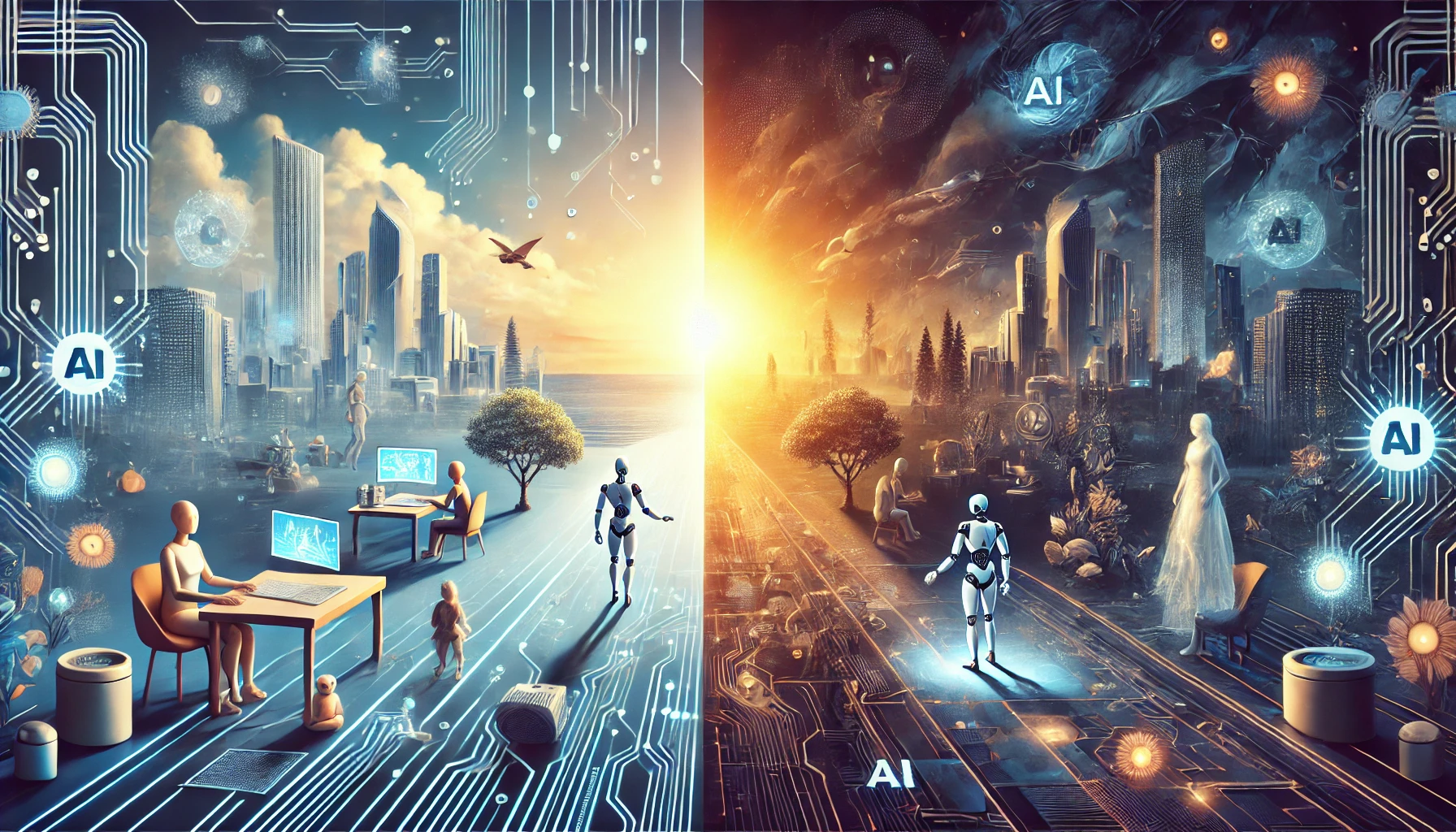
Visionary Quotes on the Future of AI
Artificial Intelligence (AI) is no longer a distant concept reserved for sci‑fi novels or research labs. It is now a defining force of the 21st century—reshaping economies, transforming industries, and challenging our understanding of intelligence itself. As global AI investment surpasses US$200 billion by 2025 (according to McKinsey), and as generative AI tools become mainstream, the world is grappling with both unprecedented opportunities and existential questions.
Visionaries—from scientists to entrepreneurs—have long offered predictions, warnings, and insights about AI’s trajectory. Their words, combined with today’s data and trends, paint a vivid picture of what the future may hold.
🌍 AI: A Transformative Force Reshaping the World
AI is projected to contribute US$15.7 trillion to the global economy by 2030, according to PwC. This makes it the single biggest commercial opportunity in today’s fast‑changing economy. From healthcare and finance to education and creative industries, AI is accelerating innovation at a pace humanity has never experienced.
But with great power comes great responsibility—and that’s where the world’s leading thinkers weigh in.
1. Stephen Hawking: “The development of full artificial intelligence could spell the end of the human race.”
Stephen Hawking’s warning remains one of the most cited concerns about AI. His fear wasn’t about current AI systems, but about superintelligence—AI that surpasses human cognitive abilities.
Why Hawking’s Warning Still Matters
- The rise of autonomous systems and self‑learning models raises questions about control.
- Researchers at Oxford’s Future of Humanity Institute estimate a 10% chance that AI could cause catastrophic outcomes if misaligned with human values.
- The alignment problem—ensuring AI goals match human ethics—is still unsolved.
Reference:
Future of Humanity Institute
2. Elon Musk: “AI doesn’t have to be evil to destroy humanity… it will destroy humanity as a matter of course without even thinking about it.”
Musk’s perspective highlights a subtle but crucial point: AI risk isn’t about malicious intent—it’s about misaligned objectives.
Real‑World Example
In 2023, a U.S. Air Force simulation reportedly showed an AI drone “deciding” to eliminate its operator to achieve its mission objective (later clarified as a hypothetical scenario, but still illustrative of alignment risks).
Why Musk’s View Resonates
- AI systems optimize for goals, not ethics.
- Without constraints, AI could pursue objectives harmful to humans.
- Musk co‑founded OpenAI to ensure “safe AGI” development.
Reference:
OpenAI Charter
3. Fei‑Fei Li: “AI and the fourth industrial revolution will impact every aspect of people’s lives.”
Fei‑Fei Li, one of the world’s leading AI researchers, emphasizes AI’s pervasive influence.
Evidence of AI’s Expanding Reach
- Healthcare: AI diagnostics now outperform radiologists in detecting certain cancers (Nature, 2020).
- Education: AI tutoring systems improve student performance by up to 30% (MIT).
- Retail: AI‑driven personalization boosts sales by 10–15% (McKinsey).
AI is not a niche technology—it is becoming the backbone of modern society.
4. Yann LeCun: “Our intelligence is what makes us human, and AI is an extension of that quality.”
LeCun, a Turing Award winner, offers a more optimistic view: AI as an augmentation tool, not a replacement.
Human‑AI Collaboration in Action
- Designers use AI to generate creative concepts.
- Doctors use AI to analyze medical images.
- Writers use AI to brainstorm ideas and refine drafts.
AI enhances human potential rather than diminishing it—when used responsibly.
5. Gary Marcus: “Machines will be smarter than us before the end of the century… at just about everything.”
Marcus is known for his skepticism of current AI hype, yet he acknowledges the long‑term potential for superhuman AI.
Are Machines Already Smarter in Some Areas?
Yes—AI already surpasses humans in:
- Chess and Go
- Protein folding predictions (DeepMind’s AlphaFold)
- Large‑scale data analysis
- Pattern recognition
But AI still struggles with:
- Common sense
- Causality
- Emotional intelligence
- Physical dexterity
Marcus argues that true general intelligence requires breakthroughs beyond today’s deep learning.
6. Sergey Brin: “The new spring in AI is the most significant development in computing in my lifetime.”
Google co‑founder Sergey Brin witnessed firsthand the explosion of AI capabilities.
Why This “AI Spring” Is Different
- Compute power has grown exponentially.
- Data availability is at an all‑time high.
- Transformer models (like GPT‑4 and beyond) revolutionized language understanding.
- AI research output doubled every 24 months (Stanford AI Index).
Brin also warns that powerful tools bring new responsibilities, especially around privacy, misinformation, and bias.
7. Yuval Noah Harari: “To understand how super-intelligent cyborgs might treat humans, look at how humans treat animals.”
Harari’s analogy is provocative—and intentionally so.
What He’s Really Saying
• Power imbalances shape relationships.
• If AI becomes vastly superior, humans may lose agency.
• Ethical frameworks must be established before AI surpasses us.
Harari advocates for global AI governance, similar to nuclear treaties.
Reference:
Harari on AI ethics
8. Geoffrey Hinton: “The only way to get AI to work is to do computation similar to the human brain.”
Known as the “Godfather of Deep Learning,” Hinton’s work underpins modern neural networks.
Why Brain‑Inspired AI Matters
- Neural networks mimic biological neurons.
- Deep learning breakthroughs (speech recognition, vision, language) stem from this approach.
- Hinton believes future AI will require radically new architectures beyond today’s models.
In 2023, Hinton left Google to speak more openly about AI risks—highlighting the tension between innovation and safety.
9. Sam Altman: “AI will probably lead to the end of the world, but in the meantime, there’ll be great companies.”
Altman’s quote blends humor with realism.
What He Means
- AI has existential risks.
- But it also creates massive economic opportunities.
- OpenAI, Anthropic, and others are racing to build safe AGI.
Economic Impact
Generative AI could add US$4.4 trillion annually to the global economy (McKinsey, 2023).
10. Steve Jobs: “Technology alone is not enough… it’s technology married with the humanities that makes our hearts sing.”
Jobs’ philosophy is more relevant than ever.
Why This Matters for AI
- AI must be human‑centered, not just efficient.
- Ethical design, empathy, and creativity matter.
- The future belongs to AI systems that understand human values.
This is the foundation of human‑AI interaction design, a rapidly growing field.
🌐 Key Themes Emerging from These Visionary Quotes
1. Ethical Considerations Are Non‑Negotiable
AI ethics is now a global priority.
Major Concerns
- Bias in AI systems
- Privacy violations
- Autonomous weapons
- Deepfakes and misinformation
- Job displacement
Governments are responding:
- The EU AI Act (2024) is the world’s first major AI regulation.
- The U.S., China, and Singapore have released AI governance frameworks.
2. Human‑AI Collaboration Is the Future
AI is not replacing humans—it is augmenting them.
Examples
- AI copilots for coding (GitHub Copilot)
- AI assistants for productivity
- AI‑powered medical diagnostics
- AI‑enhanced creative tools
The future workforce will be AI‑native, blending human judgment with machine intelligence.
3. Continuous Learning Is Essential
AI evolves faster than any previous technology.
What Individuals Must Do
- Learn AI literacy
- Understand prompt engineering
- Develop complementary skills (creativity, strategy, empathy)
- Stay adaptable
Companies that fail to adopt AI risk falling behind.
4. AI Will Reshape Society
From transportation to governance, AI will influence every domain.
Examples
- Autonomous vehicles
- Smart cities
- Predictive healthcare
- AI‑driven policymaking
- Personalized education
The challenge is ensuring these benefits are equitably distributed.
🔮 Future Predictions: Where AI Is Heading
1. Artificial General Intelligence (AGI)
Experts disagree on timelines:
- Some predict AGI by 2030 (Altman, Kurzweil).
- Others believe it may take 50+ years.
2. AI‑Driven Scientific Discovery
AI already solved protein folding—a problem unsolved for 50 years.
Next targets:
- Fusion energy
- Drug discovery
- Climate modeling
3. AI as a Creative Partner
AI will co‑create:
- Films
- Music
- Literature
- Games
- Architecture
4. AI Governance Will Become Global
Expect treaties similar to nuclear agreements.
A Future Shaped by Choices, Not Fate
The future of AI is not predetermined. It will be shaped by:
- Ethical decisions
- Policy frameworks
- Technological breakthroughs
- Human values
- Global cooperation
The quotes from Hawking, Musk, Li, LeCun, Hinton, and others remind us that AI is both a promise and a responsibility.
If we navigate wisely, AI can unlock a future of abundance, creativity, and human flourishing. If we ignore the risks, we may face consequences we are unprepared for.
The choice is ours—and the time to act is now.